
Rhythm Dash
MayaGameStudioMusic
4.610.00 Reviews
- Version
- 1.0.29
- Installs
- 1.00M
- Age Rating
- Everyone
Screenshots
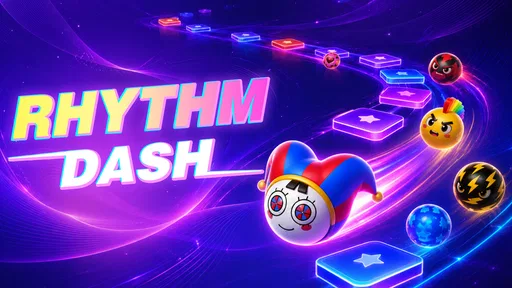
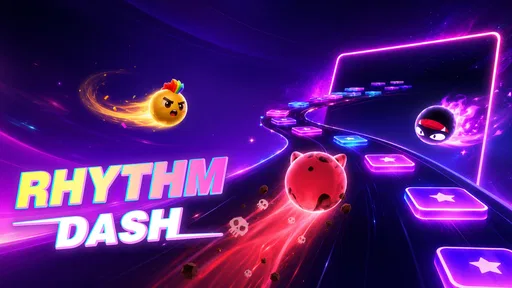
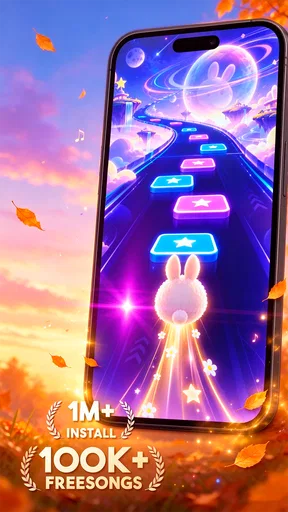
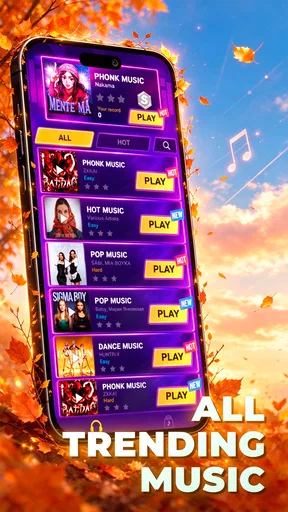
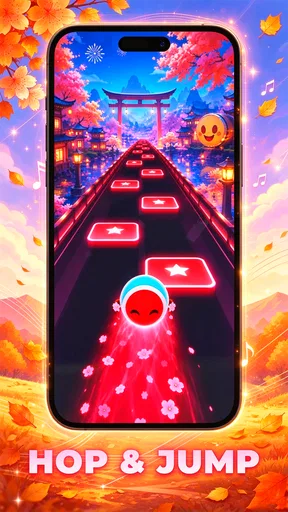
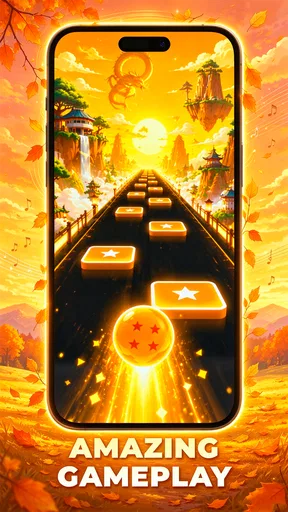

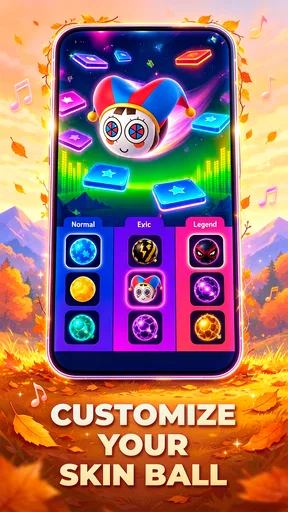
Our Review of Rhythm Dash
 Analysis by Appyee
I found Rhythm Dash easy to understand within moments: guide a bouncing ball through a changing, music-focused world while trying to keep your timing under control. That simple premise is the whole appeal. It does not ask me to learn a complicated control scheme before I can enjoy it, yet the combination of movement, color changes, and rhythm gives each attempt a little more tension than a standard endless tap game.
This is a free music game from MayaGameStudio, rated for Everyone and available for devices running Android 7.0 or later. It has passed the early curiosity stage with over a million installs and a 4.6 average from around two thousand ratings. Those figures suggest that the basic idea connects with a wide audience, but I think the more important question is whether its short-session design gives you a reason to return after the novelty of the bouncing ball wears off.
My answer is cautiously positive. I enjoyed it most when I treated each run as a quick timing exercise rather than expecting a large adventure or a deep rhythm-training tool. The game works best for players who like immediate goals, repeated attempts, and visual feedback. It is less suitable if you want a huge music library, a story campaign, or extensive customization.
How the first few sessions establish a goal
The opening appeal comes from the clarity of the task. The ball is always the focus, and the changing worlds make progress feel visible even when the underlying action remains straightforward. I never felt buried under menus or forced to study a long tutorial before playing. That matters on a phone, where a good casual game should let me begin during a short break without demanding a large time commitment.
The early goal is not complicated: stay in control, react to the rhythm, and push farther than before. That gives the first sessions a natural loop. I make a mistake, restart, and immediately understand what I want to improve. In my experience, this is more effective than a game that throws several currencies, missions, and upgrade screens at me before I have learned whether the core movement feels good.
The color-changing presentation also helps create a sense of place. The worlds do not feel like a static background behind the action; they provide a visual cue that the run is moving through something. I found that useful because rhythm games can become visually repetitive when every attempt looks identical. Here, the changing palette gives my attention another anchor, especially during a longer session.
One practical tip is to play with the screen brightness and surrounding distractions under control. The visual shifts are part of the feedback, so a crowded room or a dim display can make the experience feel less readable. I also prefer short sessions at first. Playing several attempts, taking a pause, and returning later helped me notice patterns in my own timing instead of reacting impatiently after repeated failures.
What progress feels like without overcomplication
The game’s strongest progress signal is personal improvement. A run that lasts longer, feels cleaner, or ends because of one late mistake can still feel useful. I like that kind of progress because it does not require me to understand a large system before I can see a result. The ball, the rhythm, and the changing environment keep the feedback close to the action.
At the same time, this approach has a limit. Players who need clearly stated missions, a visible collection to complete, or a strong narrative reason to continue may find the progression light. Rhythm Dash is built around the satisfaction of performing better, not around a detailed campaign with many layers of unlocks. I would not choose it as a replacement for a full rhythm game with song selection, structured stages, and deep long-term progression.
That trade-off is worth understanding before downloading. The game’s large install base and strong average rating may make it seem like a universal recommendation, but its appeal depends heavily on whether you enjoy repetition. If repeating a short challenge feels rewarding to you, the simple structure is a strength. If repetition feels like a lack of content, the same structure will become the main weakness.
I found it helpful to set a small goal before each session rather than playing aimlessly. For example, I might focus on maintaining steadier timing, reaching a familiar point without rushing, or stopping after a clean attempt instead of chasing one more run. This turns the game into a compact practice routine and reduces the frustration that can come from restarting without knowing what I am trying to improve.
The difficulty curve rewards attention more than speed
Rhythm Dash feels most satisfying when I treat timing as the priority. The bouncing movement naturally tempts me to react quickly, but rushing usually makes the next decision worse. The music category matters here because the game encourages me to connect what I see with what I hear. I get better results when I let the rhythm guide my pace instead of tapping or reacting in a panic.
The difficulty therefore feels personal as well as mechanical. A player with good visual timing may find the early action comfortable, while someone who tends to make quick, unplanned inputs may struggle sooner. I appreciate that this creates a learning curve without needing complicated controls. The challenge comes from consistency, not from memorizing a large control manual.
One non-obvious advantage is that the game can work as a short focus exercise. I would not describe it as a formal training app, but a few concentrated attempts require me to ignore unrelated notifications and pay attention to one moving object. That makes it a reasonable choice for a brief mental reset. The downside is that the same concentration can become tiring if I continue after my reactions have clearly deteriorated.
When the game starts feeling unfair, I first change my approach rather than assuming the controls are the problem. I watch the ball for a few moments, listen for the beat, and avoid making corrective inputs too early. This is especially useful for players who are used to ordinary platform games, where fast reactions often solve a problem. Here, premature reactions can be more damaging than slow ones.
I also recommend judging the game over several sessions rather than one difficult attempt. A rhythm-based challenge can feel awkward until the visual movement and audio cues begin to line up in my head. If that connection never becomes comfortable, the game may simply not match your preferred style. That is a genuine reason to skip it, not a sign that you have failed to understand the design.
Why the pacing can keep a casual player returning
The pacing works because the basic loop is immediate. I do not need to reserve an evening for it; I can play a few attempts while waiting for an appointment or during a short break. A realistic use case is a commute with limited attention: I can start quickly, concentrate for a few minutes, and stop without losing the whole value of the session. That makes it more convenient than a large music game that expects me to choose a track, configure a mode, and commit to a longer run.
However, convenience can also create retention pressure. Because restarting is easy, I can fall into the “one more try” pattern even when I am no longer playing carefully. The game’s short attempts make that loop tempting. I think the healthiest way to use it is to decide in advance how many attempts I want, particularly if I am playing before sleep or during work. The challenge is enjoyable when I choose it; it becomes irritating when it quietly takes over the break I intended to keep short.
The free price lowers the barrier to trying it, but the presence of in-app purchases means I would still approach the store screens thoughtfully. Individual purchases range from $2.99 to $19.99. I would not spend anything until I had confirmed that the core rhythm-and-ball loop genuinely holds my attention. For a casual player, the free starting point is enough to make that decision without treating payment as part of the initial learning process.
That is also where the game differs from traditional music apps and more elaborate rhythm titles. It is not trying to be a broad listening service, and it does not replace a game built around a large catalog of songs or a competitive score system. Its value is in the compact interaction between bouncing movement and changing visual worlds. If you want a quick game that happens to use musical timing, it makes sense. If you want music discovery, it is the wrong category of product.
Who will enjoy it and who should look elsewhere
I would recommend it to casual players who like repeatable challenges, bright visual changes, and controls that can be understood quickly. It is also a good fit for someone who enjoys improving through small adjustments rather than unlocking a large collection of items. The Everyone rating makes it approachable for a broad audience, although younger players may still benefit from sensible limits around screen time and purchases.
I would be more hesitant to recommend it to players who need a strong story, detailed character development, or a clearly expanding campaign. The same goes for serious rhythm-game fans who expect precise song charts, multiple difficulty modes, or extensive performance statistics. Rhythm Dash gives me a focused activity, not a full music-game ecosystem.
It may also be a poor choice if sound is not part of how you play. You can still appreciate the movement and colors, but the rhythm identity is less convincing when I treat it as a silent visual game. Headphones can make the timing relationship easier to notice, though I would keep the volume comfortable and avoid using them in situations where environmental awareness matters.
Another useful trade-off is device age. The minimum requirement of Android 7.0 keeps the game accessible to many older phones, but actual comfort can still depend on the screen, touch response, and general condition of the device. If your phone has delayed input or a display that makes rapid visual changes hard to read, the experience may feel more difficult than it should. That is particularly important in a timing game, where small delays affect the entire run.
Version, value, and the long-term verdict
The current version is 1.0.23, and the game is free to install. I see that combination as a reason to try it rather than a promise of endless depth. The strongest value comes from the first-hand loop: begin quickly, learn the timing, watch the world change, and attempt to improve. The game earns its place on my phone when I want something active but uncomplicated.
Its progression is convincing at the level of personal mastery. I can identify a mistake, adjust my timing, and feel a difference in the next attempt. It is less convincing as a broad progression system because the appeal does not appear to depend on a large set of goals or a complex unlock path. That is not necessarily a flaw; it simply means the game has to keep winning me over through feel and pacing rather than through a long checklist.
My final judgment is that Rhythm Dash is a focused, approachable music game with a clear identity. I like the way the bouncing ball, rhythm, and color-changing worlds work together to make short sessions feel purposeful. I also appreciate that the controls do not get in the way of the challenge. The main limitation is that players looking for extensive content may reach the edge of its appeal sooner than players who enjoy repeating a compact skill test.
The progression verdict is simple: try it for the timing, stay for the improvement, and skip it if you need a deep campaign. MayaGameStudio has made something that fits naturally into small pockets of free time, and its free entry point makes testing that fit easy. I would recommend it to a friend who wants a colorful, rhythm-led challenge on Android, while making clear that its lasting value depends on whether getting slightly better each run is enough motivation for you.
Verdict
Strengths of Rhythm Dash
- Fast, responsive controls make each run feel satisfying.
- Short levels are ideal for quick gaming sessions.
- Colorful visuals and music create an energetic atmosphere.
- Simple mechanics make it easy for new players to start.
- Replay value comes from improving timing and high scores.
Limitations of Rhythm Dash
- Difficulty can rise sharply, causing frustrating failed attempts.
- Some songs or content may feel repetitive after extended play.
- Mistimed taps can be hard to distinguish during busy sections.
- Progress may feel slow without frequent successful runs.
- Ads or optional purchases may interrupt the overall experience.
Other Releases by MayaGameStudio
View All
Beat Rider: Neon Rush
Music4.2
Similar Picks in This Category
View All
Tiles Hop Music & Ball Game
AMANOTES PTE. LTD.4.3

Magic Tiles 3™ - Piano Game
AMANOTES PTE. LTD.4.6

Real Piano
Bilkon3.7

Piano Game: Classic Music Song
Dream Tiles Piano Game Studio4.0

Smash Colors: Music Ball Rush
BADSNOWBALL HONGKONG LIMITED4.2

Piano Music Go-EDM Piano Games
Joy Journey Music Games4.5
Frequently Asked Questions
What is Rhythm Dash and how does the gameplay work?
Rhythm Dash is a music-based action game in which you guide a character or object through fast-moving levels while matching your movements to the beat. Obstacles, jumps, turns, and other challenges are generally synchronized with the soundtrack, so success depends on both timing and concentration. The game is easy to understand initially, but later stages require quick reactions and memorization.
Is Rhythm Dash free to download and play?
Rhythm Dash can generally be downloaded without an upfront payment, although the exact availability of free content may depend on the Android or iOS version. Players should expect possible advertisements, optional in-app purchases, or paid content such as extra songs, cosmetic items, retries, and other bonuses. It is advisable to review the store listing and purchase settings before starting.
Does Rhythm Dash require an internet connection?
The basic gameplay experience may work offline once the necessary files and levels have been installed, which is useful when traveling or playing without mobile data. However, an internet connection may still be required for downloading new content, viewing advertisements, synchronizing progress, using online features, or completing purchases. Offline functionality can also vary between device versions and updates.
Is Rhythm Dash suitable for children and casual players?
Rhythm Dash is accessible to casual players because its controls are usually simple and the main objective can be understood quickly. Nevertheless, its rapid pace and increasingly difficult levels may frustrate younger children or players who dislike repeated attempts. Parents should also check advertising, in-app purchase, privacy, and age-rating information before allowing children to play without supervision.
What devices are recommended for playing Rhythm Dash smoothly?
Rhythm Dash should run comfortably on many modern Android and iOS devices, but performance can differ depending on the phone or tablet, operating-system version, available storage, and background applications. A device with a recent processor, sufficient free space, and stable audio performance will provide more responsive controls. Updating the game and closing unnecessary apps may help reduce lag.
Play our best games!


